
A Parkinson's diagnosis can pose challenges not just for the individual with the condition, but also those loved ones and family members that surround them. This honest conversation with Jeremy Vine and his sister, Sonya, is full of personal experiences, life lessons, and practical tips for those helping a loved one with Parkinson's.
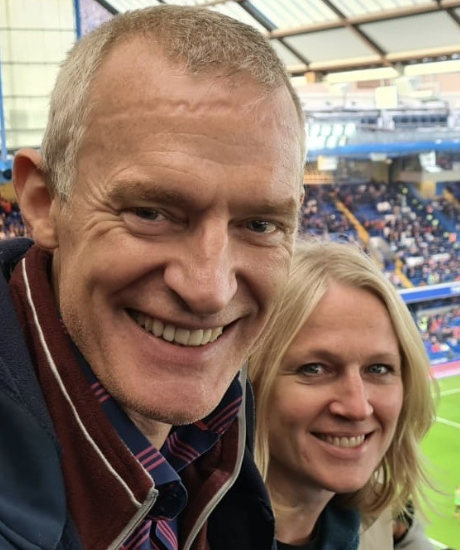
“That’s an old person’s disease”
Sonya’s husband Chris was diagnosed at 34, just a few months after they got married.
Sonya said, ‘It won’t be Parkinson’s. That’s an old person’s disease.’”
Her father had Parkinson's, she'd seen the symptoms first hand, but never imagined her husband in his mid-30s could have it.
Jeremy says 19 people out of 20 get it after the age of 50. However, those who receive a diagnosis under the age of 50 have what is called Young-Onset Parkinson's. Because Parkinson's is often thought of as a condition that only older people develop, many people with Young-Onset never suspect they have Parkinson's.
Not everyone shakes
Despite common portrayals of Parkinson's, Vicky reminds listeners that “There are over 30 different symptoms. Not everyone shakes.”
Chris doesn’t have a tremor, but struggles with a number of other symptoms including freezing of gait and hypophonia (loss of voice).
Their dad “just had everything slowing down.” Vicky describes it as trying to walk through treacle.
Keep moving
Chris’s neurologist said, “Be a moving target, so you got to keep moving, keep exercising.”
He played tennis and went running every day. He can’t play tennis anymore, but he does still sometimes go for runs, “and that’s a really good thing for him.”
Exercise is a disease modifying treatment for Parkinson’s, and being told about Parkinson's exercise upon diagnosis is key.
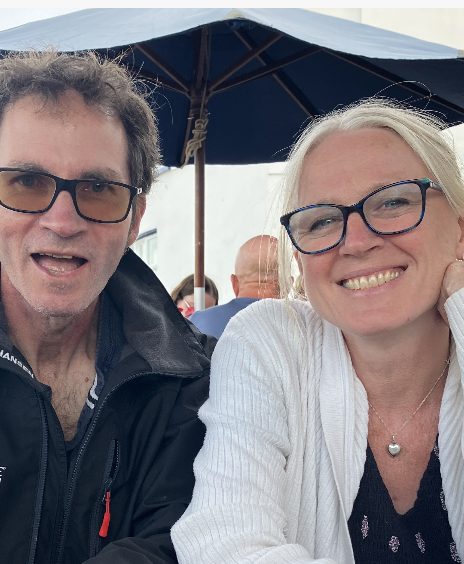
It’s not a personality transplant
We often focus on the motor symptoms, but the non-motor symptoms can be far more debilitating: apathy, depression, low mood, anxiety. Anxiety drives those motor symptoms and can make them far worse.
“No, they haven’t had a personality transplant. This is part of this condition." says Maria.
Dopamine is released when we achieve, when we enjoy something, when we exercise well, so a lack of dopamine has that apathetic effect.
Looking after yourself as a loved one
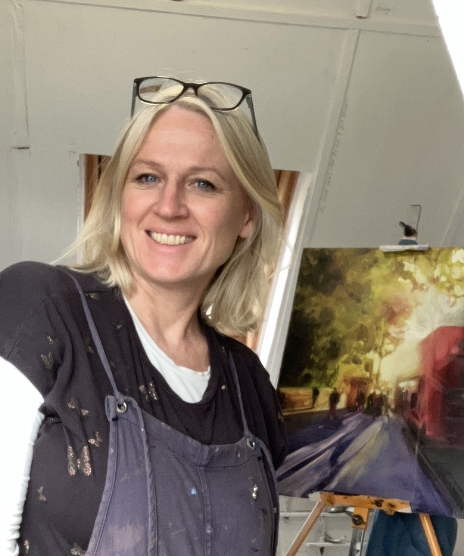
- “You need a haven.” Sonya paints in the loft to have space to unwind.
- Find things that you love doing and schedule them into your day and week.
- Have a good support network of friends.
- Try talking therapy: an hour a week when you can just offload.
- Delegate the tasks.
- Put your life jacket on first.
Practical tips from Sonya
- Free gym membership: people with Parkinson’s can go for free with their carer at Everyone Active.
- Get your disabled parking permit and “grab all the perks you can.”
- Get airport assistance when going on holiday.
- You might be able to get rid of your car tax.
- National Carers Card offers discounts and benefits for unpaid carers.
- When Applying for PIP: “always answer the questions as if it is your worst day.”
- Register children as young carers at school and at the doctor.
Where Chris is now
About a year and a half ago, Chris started on a pump, which means he got rid of all his other pills apart from one, and he doesn’t have those awful on and off periods. “Physically he’s great.”
His biggest problem is that he just cannot speak. They find different ways of communicating, such as British Sign Language and a speech assistance app (available on Google Play and iOS). They go to the cinema, go out for coffee and play cards. Their lives look different, but they find ways to stay connected.
Hope on the horizon
“There are some real developments” in Parkinson's research, Jeremy says there's a real chance one day he’s going to wake up and turn on the news, and they’re going to say “we’ve done it.”
In the mean time, Reach Your Peak are here to spread awareness and provide specialist-led, Parkinson's-specific exercises to help people with Parkinson's manage their symptoms and, ultimately, slow progression.
To learn more about Jeremy and Sonya's story, listen to Shaking It Up below...