
Having a goal like running a marathon can be a great motivator for staying fit.
However, it takes a huge toll on the body. So, it’s not surprising that you might be wondering if you can run a marathon when you have Parkinson’s.
The good news is that with the right preparation you can. Out of 120 people that ran the 2025 London Marathon for Parkinson’s UK, 11 of them had Parkinson’s. That’s incredible and we want you to also experience the sense of accomplishment that comes from taking on such a challenge.
However, before you lace up your shoes and head out, it’s worth taking some time to put together a training plan. That’s why we spoke to Anna Castiaux, Physical Activity Programme Lead at Parkinson’s UK and Paul Logue, a seasoned runner with Parkinson’s. They shared their top training tips to help you maximise your chances of crossing that finishing line.
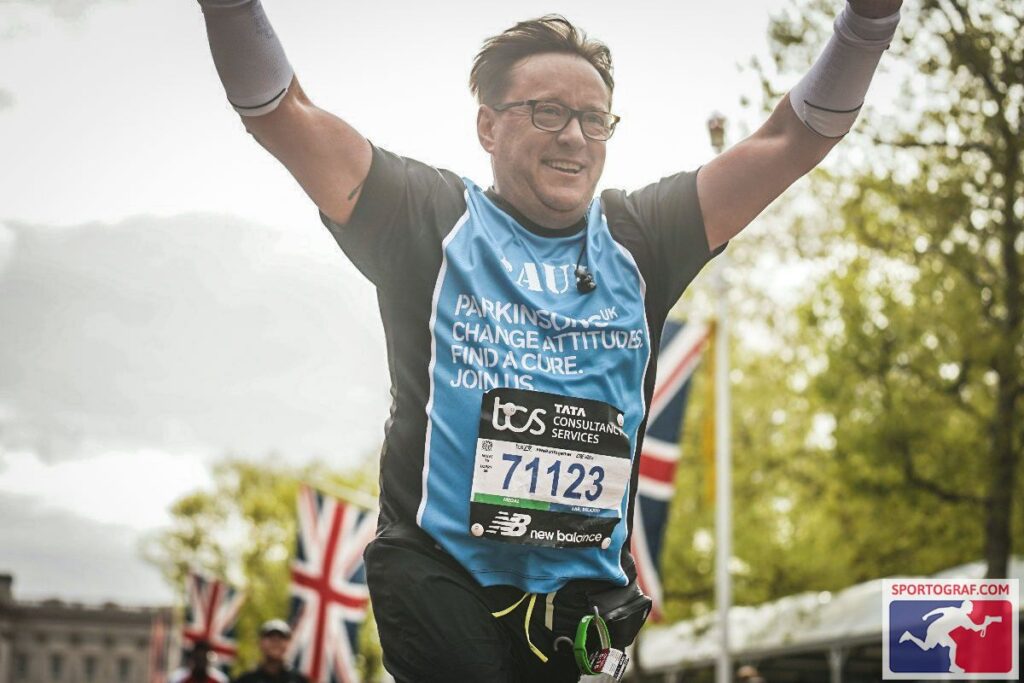
Paul was diagnosed with Parkinson’s when he was 52. He’d been experiencing a range of symptoms including balance issues and a tremor on his left side. Before his diagnosis he’d led an active life and had already completed five marathons.
After his diagnosis, he says he initially wrapped himself up in cottonwool and had to stop some activities. He says: “With the medication I found it harder and harder to ride my motorbike and my push bike.”
However, he’s still able to enjoy activities like boxing and running. He’s even completed three marathons since his diagnosis and says although the running's a lot slower he loves it.
Marathon training when you have Parkinson’s
When preparing for a marathon he always gives his doctor a heads up.
“Respect the distance” he says. “I take it very seriously. Nutrition and hydration are key for me. I also look at my mealtimes and medication times to make sure it supports my running.”
Paul follows a 16-week training plan but when you choose to start training is very personal, Anna says. It depends on your fitness level and previous running experience.
She also emphasises that your plan needs to factor in how many runs you can realistically fit in each week. If you can only fit in a few runs, she advises beginning your training programme further in advance.
“Don’t just dive in at the deep end,” she says. “If you’re new to running you might want to start with something like Couch to 5k.”
Once you’re used to running, aim for at least three runs a week. This will allow you to fit in the different types of runs involved in training for a marathon. These include:
- Long runs to help build endurance
- Short runs to help you avoid over training
- Hill runs to help with strength and endurance
- Interval runs, where you vary your pace, to help build strength, speed and endurance
You could also speak to a professional running coach if you’d like help with creating your plan. Otherwise, you can access free training programmes online but be sure to use a trusted source like a marathon organiser’s website.
You’ll notice that these programmes also factor in rest days which is important for avoiding injury and burn out. Every programme also needs a period at the end where you taper off. This will help you to be well rested for your big day.
Another key aspect to consider is fitting in some strength training to help stave off injuries. After all, we don’t want you to work hard only to have an injury get in the way!
Strength training and stretching when running with Parkinson’s
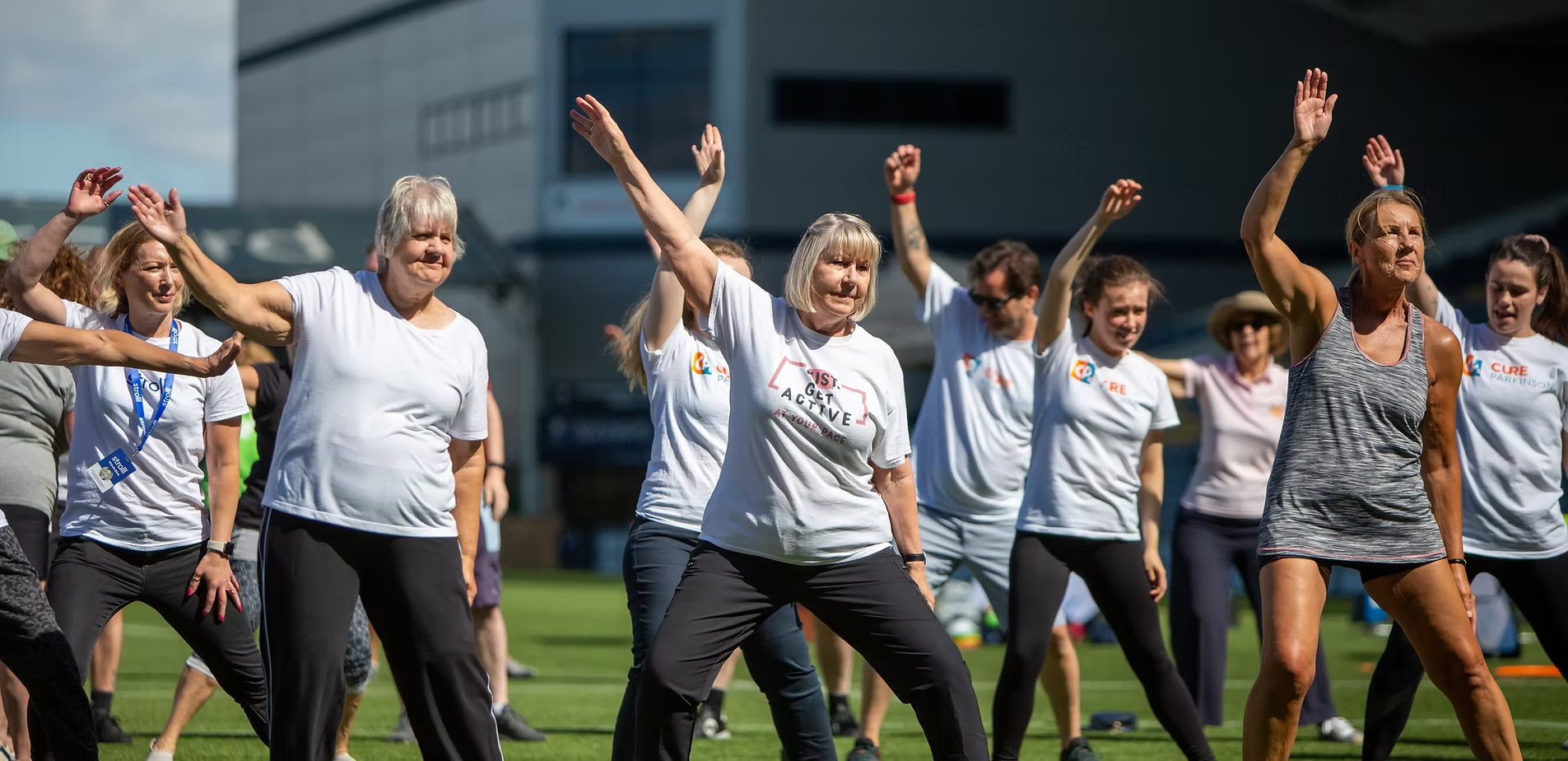
Strength training and doing stretches that support running can help prevent common running injuries. A personal trainer with running expertise can help with these. There are also some great resources you can use from websites like Runner’s World.
And you might be glad to hear that this isn’t just about lifting weights either. There are many ways to strength train. Paul says: “I can’t lift free weights because of balance issues which mean it’s not safe for me”
Instead, he uses resistance bands which are brilliant at getting to those hard to reach muscles and he does body weight exercises too. He also incorporates stretches that help with his stiff neck.
Essential running gear
Investing in the right gear also helps support your training. “Feet really suffer when running a marathon,” Anna says.
That’s why the one piece of kit she says is non-negotiable is a good pair of shoes. She suggests going to a running shop where someone can analyse your gait to help you choose the right shoes. “This doesn’t have to be an expensive pair, just make sure it feels right for you,” she adds.
Other useful gear includes a head torch and high vis vest to keep you safe if you plan on running in the dark.
Safety tips for running with Parkinson’s
A few other safety measures to consider include how your medication might affect you. In some cases, for example, your medication may wear off. If you have any concerns about medication, then be sure to speak to a health professional like your Parkinson’s nurse beforehand.
You might also want to think about your route and whether there might be distractions that could make you trip.
Paul says: “I don't like running in the streets where I live because I don't like the driveways, the up and down, the constant watching. There’s too much looking left and right and so my balance goes.” Instead, he chooses to run by the seafront near his home.
As a precaution, it’s good to tell someone where you’re going and when you expect to be back. Also be sure to take your phone with you, so you can contact someone if you need to. You may also want to look into running with other people.

Finding a community of runners
Park runs welcome people of all abilities and can be a good place to start because you can walk too.
You could also join a running club where Anna says: “You’ll often find people with a wealth of knowledge.”
You may also meet someone who could be a running buddy. Running with others can be a great motivator especially if you experience apathy like many people with Parkinson’s do.
Managing Parkinson’s apathy
Anna and Paul both have a few tips to help with motivation. These include:
- Creating playlists of songs you enjoy running to.
- Eating properly because if you run out of energy you’ll run out of motivation.
- Setting yourself milestones to aim for like completing shorter races like a 5k or 10k race.
- Entering local races that are easy to get to.
If you do find your motivation dips on some days, or you have a bad run, don’t beat yourself up.
Paul says: “If you have a day where you go out for a run and it's just not happening it doesn't matter. You can start again tomorrow.”
Having good and bad days is part of running and it’s okay to adjust plans if you need to. After a training plan that went well Paul describes having a flare up the day before running the London Marathon. He adjusted his distance and instead ran at a slower pace. He said: “I wasn't flustered because I knew it was just about getting round.”
In the end, he met two other runners with Parkinson’s and they crossed the finishing line together.
Recovering after your marathon
Looking after yourself after your marathon is just as important. You might find you’re more prone to infections afterwards, so do rest up and eat nutritious food. It’s also good to have an active recovery with gentle exercises to help with soreness.
Paul finds walking up and down in a swimming pool while holding onto the side helps his recovery.
Conclusion
If you’re interested in running for a charity like Parkinson’s UK, you can find a local marathon on their website.
For more tips on exercising with Parkinson's why not sign up to our newsletter? We also have several online exercise classes for people with Parkinson’s which are designed to support you on your fitness journey.